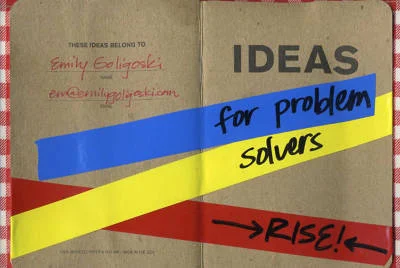
I was happy to get to take part in the Stanford d.school’s first hackathon this weekend, and not just because of the high energy of the 150 designers, developers, and other creators who participated. Their ideas are great. And that’s no easy feat when the challenge brief calls for creating large-scale ways to bring design thinking to the world. Take a peak at the Lean Design Experience, d.radio and other well-considered solutions that were created in 48 fast hours.
Today the web-based International Museum of Women launchesMAMA: Motherhood Around the Globe, an online exhibition that I could hardly be more excited about. It will combine art, video documentary, and storytelling to explore the aspirations of a dynamic set of women (including but not limited to working mothers in China, the First Ladies of Africa, and surrogate mothers in India). Other topics including work, identity, advocacy, and modern fatherhood will be spotlighted throughout this year.
Novelist Aminatta Forna said it well when she explained that “to me there is no more pressing concern today than maternal health, and the global failure to save women’s lives is a human rights disaster. The IMOW’s timely exhibition highlights both the wonders and the terrible tragedy which motherhood can be.”
Christy Turlington Burns’ organization Every Mother Counts is partnering on the exhibit, but the body of community work is by no means intended only for new mothers. Instead, it’s created to be a resource for anyone who cares about mothers and children, who’s concerned about the health and leadership of women globally, who has a child, or who has been a child.
…is no small hosting effort, but leave it to the good folks at social accelerator COMMON to make it fun to find innovative solutions to global problems. After a stop in NYC the large-scale pitch party for entrepreneurs will head to Cape Town to work with Design Indaba and renowned designer judges in awarding $25K+ (200K Rand) to people creating positive social change in Africa. I’m eagerly awaiting the applicant videos and, even more, seeing the local ideas in action.
Bay Area-ites have the chance tonight to engage in a fun project to protect international development, the Cycle for Security Cross-Country Bike Tour. Laguitas will be providing free brews at Rally Pad starting at 6:30 as friend Janessa Goldbeck (@jgoldbeck, formerly with the Genocide Intervention Network) prepares to take off on a 4,200 mile cross-country bike trip. It’s not just for the exercise but to talk with Americans about the importance of foreign aid programs that provide millions of people around the world with nutrition, education, and health care.
Given that funding for these programs is in jeopardy in Congress, the effort is important for raising awareness about how vital they are to saving lives abroad and keeping Americans safe. Go learn about it.
This morning I saw a little boy, maybe three years old, walk into a coffee shop door (which would have been me on any other day). It wasn’t because he’s just getting his balance; he had a smartphone in hand and eyes on screen, making him a sort of miniature version of the distracted adults around. It has me thinking about how we design for awareness and more multimedia decision-making.
This year our d.school Design Garage team “The Presence Project” will be focusing on this issue exactly, and I couldn’t be more excited about the work. If you’re also interested in mindfulness and multitasking, the New York Times and Slate have run thoughtful pieces this week and there’s lots of dialogue at #calmingtech.
I’ve been listening to 99% Invisible while traveling, and the design series’ fresh take on everything from elevator audio to the group Anonymous is well worth sharing. Created by East Bay producer Roman Mars (whose talents I know from Chicago Public Radio), the episodes are brief–and great–enough to listen to twice.
After spending the week with family and friends in and around Miami, I was ecstatic to see “Here Comes the Neighborhood,” a not-so-new but utterly amazing project out of the Wynwood neighborhood. Graffiti writers and artists have worked in the troubled area to create commissions–however temporary–in a place where the general urban undesirability had been much longer-lasting. A contributor to an OpenIDEO challenge about revitalizing cities shared the “docuseries” that has resulted from the project, and I highly recommend it as a great use of an hour during these holidays.
At the Designer Fund’s well-attended Women in Design forum recently, I was glad to get to hear stories from teen girls who participated in Iridescent Learning’s mobile app creation program. I had previously written about the group’s hands on development work (the program also gets young gals to pitch their ideas and prototypes to investors), but hearing from the high schoolers themselves about their gains was nothing if not inspiring. In advance of the upcoming class this winter and spring, Iridescent is taking applications for mentors, teaching assistants and speakers–people passionate about technology who want to work with schools, companies, and smart kids. Consider it, won’t you?
After collaborating recently with a few CS grad students who are focused on music visualization software, I was excited to come home from the Gray Area Foundation for the Arts’ benefit to play around with a tool the organization shared, Seaquence. The “experiment in musical composition” reminds me of projects that use knitted sea life-themed sculpture to demonstrate the physical world, this time through sound. Synthesized personal orchestras are easily shared, and the visuals are a lot of fun to try. Go GAFFTA.
This week was a big one for TeachAIDS, the Palo Alto-based non-profit that creates HIV prevention software that’s being used in more than 50 countries. On World AIDS Day it launched educational animations with characters and content specific to Botswana as founder Piya Sorcar (pictured left, with Lisa Ling) talked at TEDxWomen about the differences between awareness (knowing that the disease exists and kills) and knowledge (understanding ways to keep yourself from becoming infected). The organization has succeeded–and been culturally sensitive while doing so–where many large-scale campaigns haven’t: helping people get smart about their own health. Sorcar’s recent talk is well worth a look, and you’ll see why the work has received San Francisco AIDS Foundation kudos.